
Construction Business
How Small Contractors Win Work on Louisiana Megaprojects
Published August 7, 2026 · Updated August 11, 2026
- louisiana megaprojects
- small contractors
- wip reporting
- industrial construction
- balancebuild pro
- gulf coast
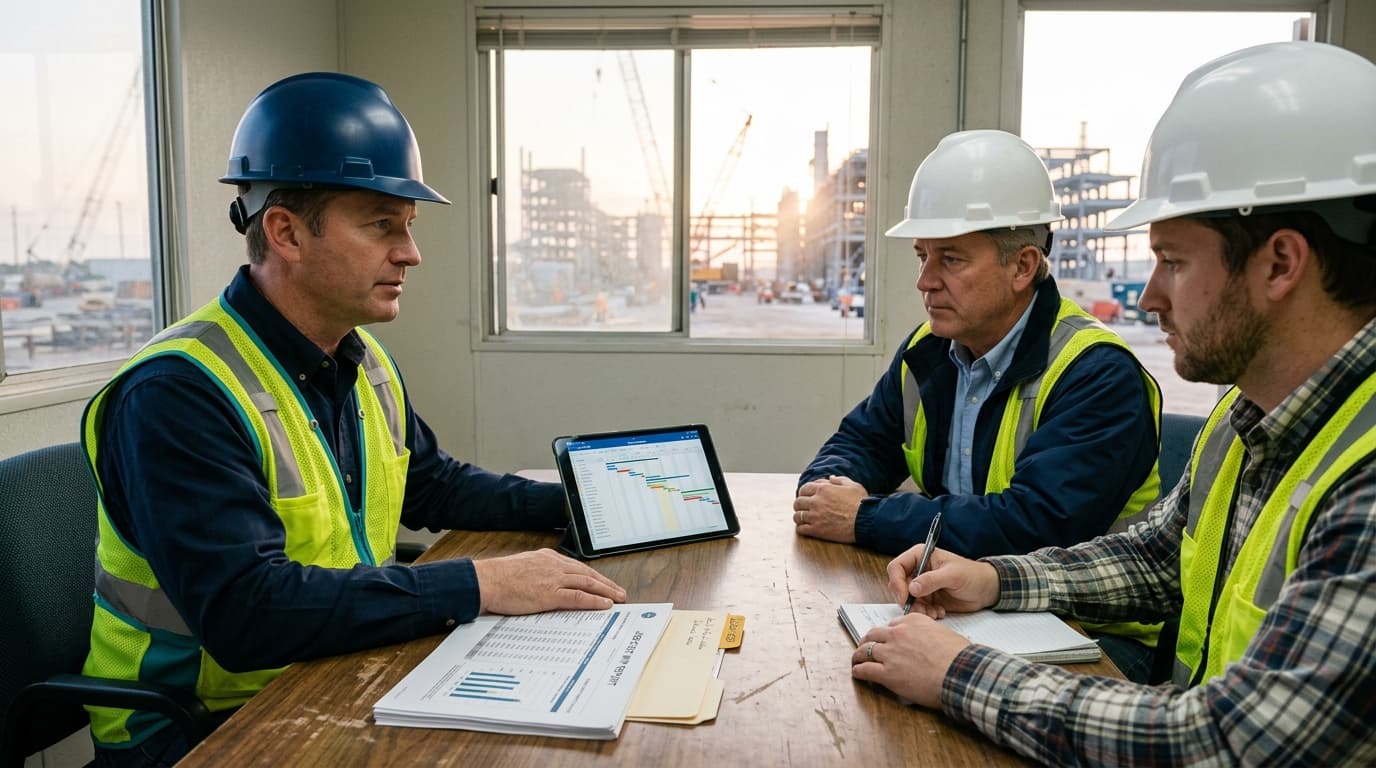
Answer first: Small contractors win Louisiana megaproject packages when they look operationally ready to big GCs: living schedules, same-day documentation, clear communication, and WIP or billing that matches field progress. Size is secondary to reducing the prime's risk.
Louisiana and the Texas Gulf Coast are in a multi-year industrial construction wave. Primes cannot staff every gap themselves, so capable specialty contractors still have a real opening. The catch is simple. Packages go to firms that look organized, not only to the cheapest crew with a pickup and a handshake.
Who this is for: specialty contractors, trade houses, and growing GCs who want a meaningful piece of industrial work without pretending to be a Fortune 500 contractor. Your edge is not size. Your edge is operational clarity.
The Megaproject Map Around Louisiana Right Now
You do not need to win the whole campus. You need to be ready when a Tier 1 or Tier 2 contractor needs reliable help on civil support, electrical packages, mechanical installs, site logistics, finishes, or specialty scopes that keep slipping because they cannot hire fast enough.
- Meta AI data center campus, Richland Parish: Originally announced near $10 billion and since expanded into one of the largest AI data center builds in the country, with peak construction employment measured in the thousands. Local and regional subcontract capacity matters here.
- $2.3B I-10 Calcasieu River Bridge, Southwest Louisiana: A multi-year corridor rebuild around Lake Charles and Westlake. Infrastructure of this scale pulls civil, structural, utility, and specialty trades for years, not months.
- Hyundai Steel facility, Ascension Parish: A multi-billion-dollar ultra-low-carbon steel mill investment anchoring RiverPlex near Donaldsonville. Industrial plant work creates long runways for site, structural, mechanical, and specialty packages.
- LNG expansions, Calcasieu and Cameron Parishes: Southwest Louisiana continues to absorb massive liquefaction and export buildouts along the Calcasieu Pass corridor and Cameron Parish. Energy infrastructure work rewards contractors who can document production, delays, and safety without drama.
These are not one-off ribbon cuttings. They are multi-year ecosystems. Texas Gulf industrial work adds even more pressure on the same labor pool. That is why large primes are opening the door wider to smaller companies. The door only stays open for firms that reduce the prime's risk, not increase it.
What "Having Your Act Together" Looks Like to a Big Contractor
When a large contractor evaluates a smaller partner, they are not grading your logo. They are asking whether you will create schedule noise, communication black holes, or billing confusion.
Organized workflow, live schedules, clear communication, and clean books are not four separate hobbies. They are one professional image. If any piece is messy, the whole company looks messy.
Workflow
Who owns the daily log, who updates the activity status, and who closes the loop when a delay hits. If that is tribal knowledge in one superintendent's head, you look fragile.
Schedules
A current schedule is a trust signal. Missed predecessors, silent float burn, and "we'll catch up next week" language make you look like a liability on an industrial critical path.
Communication
Big GCs expect timely answers with dates, photos, impacted trades, and next actions. Silence reads as risk. Scattered text threads read as amateur hour.
Books
Progress claims, retainage, change orders, and job costs that match field reality. When your billing story and production story disagree, prequal and pay apps get harder every month.
This is exactly why BalanceBuild Pro exists. The product is built to keep field production, schedule awareness, documentation, and office visibility in one system so a small company can present like a disciplined contractor, not a side hustle.
WIP, Explained for Contractors Trying to Look Credible
WIP stands for Work in Progress. In construction accounting, a WIP schedule compares what you have earned on a job (percent complete times contract value) against what you have billed and what it has cost you so far.
In plain English, WIP answers three questions every serious GC and bonding agent cares about:
- Are you overbilling or underbilling relative to actual progress?
- Are your jobs making money or quietly bleeding margin?
- Do your field numbers and your financial numbers tell the same story?
Why WIP matters on megaprojects: a small contractor who cannot explain percent complete, remaining cost to finish, and billing position looks like a cash-flow risk. A small contractor with a coherent WIP story looks financeable, coachable, and safe to put on a package.
A simple WIP example
Say you have a $500,000 electrical package. You are 40% complete. You have billed $150,000. Your costs to date are $160,000. Earned revenue is $200,000. You are underbilled by $50,000, and your cost position already signals margin pressure if remaining work is not tracked tightly.
You do not need a CFO title to understand that. You do need a system where field percent complete is not a guess typed into a spreadsheet the night before the pay app is due. That is where job costing discipline and field documentation meet. If you have read our post on job costing mistakes that kill contractor profits, this is the same principle with higher stakes.
How the Pieces Work Together (Not in Silos)
Large contractors notice pattern, not perfection. They notice whether your company behaves like one organism:
- Daily field truth feeds the schedule. Delays are logged, not narrated after the fact.
- Schedule reality feeds communication. You can tell the GC what moved, why, and what happens next.
- Production reality feeds the books. Percent complete, change orders, and costs stay aligned.
- Books feed credibility. Pay apps, WIP, and cash conversations stop sounding improvised.
That loop is also how you protect yourself. Clean documentation is not only a prequal costume. It is how you defend weather impacts, sub performance issues, and liquidated damages exposure. Our deeper dive on subcontractor liability protection and searchable daily logs covers that side of the house.
What Big Primes Are Quietly Screening For
You may never see the internal scorecard, but the filters are consistent:
- Can we reach a decision-maker quickly?
- Do they update status without being chased?
- Is their paperwork boringly consistent?
- Do their billings match visible progress?
- Will they create claims noise or reduce it?
A polished website helps. A current COI packet helps. Neither substitutes for operational rhythm. The contractors winning second and third packages are the ones who made the first package easy to manage.
Where BalanceBuild Pro Fits (And Where Bookkeeping Fits)
BalanceBuild Pro is the primary operating system for this professional image: project setup, schedules, daily logs, delay records, field-to-office visibility, and the documentation trail that makes a small company look ready for industrial scrutiny.
Bookkeeping support from Balance & Build Consulting is available as a supporting service for BalanceBuild Pro customers who want CPA-ready QuickBooks discipline tied to the same project reality. It is not a standalone lead product. The point is alignment: field production and financial reporting should not live in two different worlds.
If your goal is a piece of the Louisiana and Gulf Coast industrial pie, start with the operating system that makes you look reliable under pressure. Then tighten the books around that system, not the other way around.
A Practical Readiness Checklist for the Next Prequal
- Every active job has a living schedule owner and a daily documentation habit.
- Delay and weather events are timestamped, not reconstructed from memory.
- Percent complete used for billing matches what the field can defend.
- You can explain WIP position on your top three jobs in under ten minutes.
- Your GC communications include dates, impact, and next action, not vibes.
- Your insurance, safety, and project files are one ask away, not a scavenger hunt.
If you cannot clear that list today, you are not out of the game. You are simply early enough to fix the gaps before the next bid walk or vendor fair.
The Opportunity Is Real. The Bar Is Professional.
Meta's Richland Parish campus, the Calcasieu River Bridge corridor, Hyundai Steel in Ascension Parish, and the LNG buildouts across Calcasieu and Cameron are all proof that the work volume is here. The labor shortage on the prime side is exactly why smaller contractors are getting a second look.
Second looks turn into contracts when you present as organized: workflow, schedule, communication, and books moving together. That is how a small company earns trust on a big job without pretending to be a big company.
FAQ
What do big GCs look for in small Louisiana subcontractors?
Timely communication with dates and next actions, a living schedule, consistent documentation, and billings that match visible progress. Size matters less than whether you reduce the prime's risk.
What is WIP and why does it matter for megaproject prequal?
WIP (Work in Progress) compares earned revenue to billings and costs. A coherent WIP story shows over/underbilling and margin risk, which bonding agents and large GCs care about.
Where does BalanceBuild Pro fit for small contractors?
BalanceBuild Pro helps smaller shops run schedules, AI daily logs, delay documentation, and CSI pay apps so field-to-office clarity shows up under industrial scrutiny.
Do I need perfect books before I look ready?
Start with operating rhythm. Then align bookkeeping to the same project reality. Bookkeeping support from Balance & Build Consulting is available for BalanceBuild Pro customers.
Ready to tighten the operating rhythm? Start a BalanceBuild Pro trial or book a discovery call.
Ready for Gulf Coast megaproject documentation that holds up?
Start a BalanceBuild Pro trial for AI daily logs and searchable Project Historian, or book a short operations diagnostic.
More from Balance & Build: All insights