
Business Planning
Business Plan Financial Projections Investors Actually Trust
Published September 19, 2025 · Updated August 11, 2026
- business planning
- financial projections
- funding

Answer first: Investor-ready business plan financial projections for contractors usually include a pro forma balance sheet, income statement, cash flow statement, sources and uses of funds, and clear return measures. The tables prove you can protect capital, not only describe the work you want to win.
By Casy Broussard | Updated August 2026 (originally published September 2025)
When attracting funding, words can open the meeting. Numbers close it. At Balance & Build Consulting, LLC we work with contractors who know the trade and still struggle to present financials that earn confidence. This guide covers the tables that matter and why they build trust.
For the broader planning roadmap, read the contractor's guide to business planning. For day-to-day systems that feed projections, see how to get organized financially.

The balance sheet: a snapshot of stability
Your pro forma balance sheet shows what the company owns, what it owes, and what remains. Funders use it to ask a simple question: is this business financially sound, or one setback away from trouble?
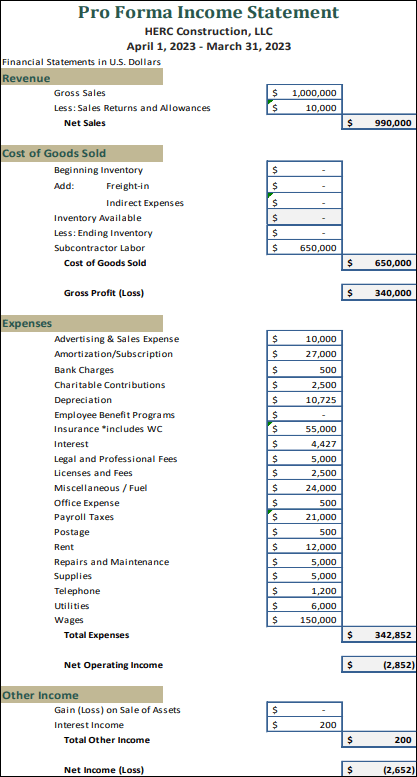
The income statement: profitability in action
The income statement tells the story of revenue, expenses, and profit. It is often the clearest signal of whether the model works and whether growth creates lasting margin.
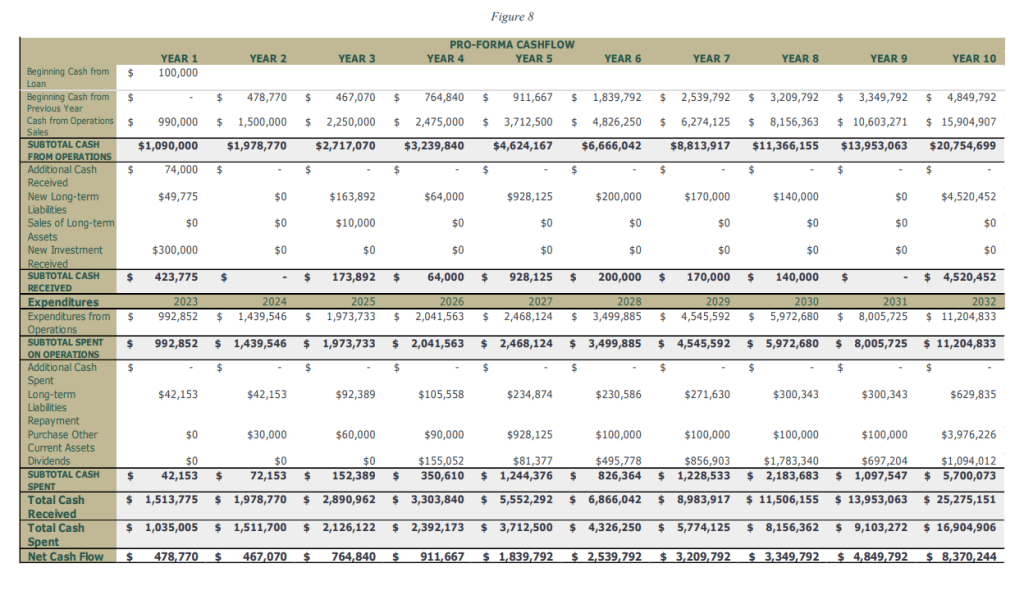
The cash flow statement: keeping operations moving
Even profitable contractors stall when cash timing breaks. The pro forma cash flow statement shows whether bills, payroll, and project costs can be covered without constant emergency funding.
NPV, IRR, and payback: speaking the investor's language
Net Present Value (NPV), Internal Rate of Return (IRR), and payback period help quantify return and timing. Including them shows you understand that money has a cost and that lenders or investors have a timeline.
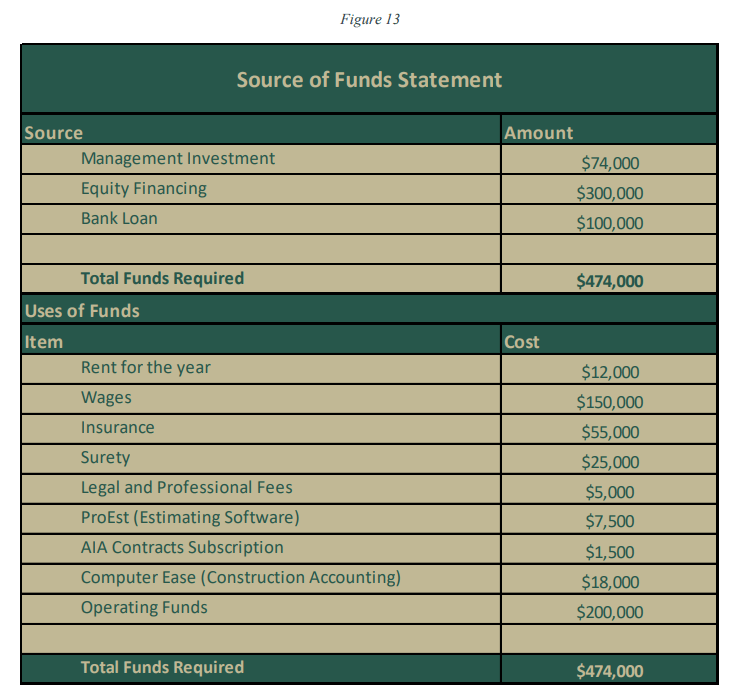
Sources and uses of funds: transparency creates trust
Funders want to know exactly how dollars will be spent. A sources and uses table shows where money comes from and how it will be applied. That clarity reads as discipline.
Why these tables matter together
Together they tell a story of preparedness: you know your numbers, you have a growth strategy, and you can protect capital. That is often the difference between a polite no and a signed commitment.
Beyond basic templates
The U.S. Small Business Administration offers a useful starting point at sba.gov. A basic outline helps first-time planners. Funding conversations usually need contractor-specific financials tied to real books.
As a QuickBooks Level 2 ProAdvisor practice, Balance & Build Consulting helps align bookkeeping with projections so you can update funders with professional reports. See also our funding and growth strategies and construction bookkeeping services.

FAQ
What financial tables belong in a contractor business plan?
Balance sheet, income statement, cash flow, sources and uses, plus return measures when capital is being raised.
Why emphasize cash flow?
Profit without cash timing still stalls payroll and materials.
Is an SBA template enough?
It is a start. Funding packages usually need stronger, contractor-specific financials.
How do clean books help?
Historical reports make growth and margin assumptions credible instead of guesswork.
Ready to strengthen your projections? Book a discovery call with Balance & Build Consulting, LLC.
Build Investor-Ready Financial Projections
Balance & Build Consulting, LLC helps contractors turn clean books into credible projections for funding conversations, growth plans, and lender packages.
More from Balance & Build: All insights